What We Keep
16.07.2026
Collecting, Memory, and Data
The first thing that comes to mind when I think of collectors are stamp collectors and coin collectors. Last semester, we visited a preparator at the Charité Museum of Medical History who showed us, among other things, her personal collection of gallstones, a jar filled with preserved mice, and countless stuffed animals and Moulages displayed in her office. At first glance, the sight was unsettling and somewhat disgusting, but on second thought it was strangely captivating and disarmingly honest. People who collect and proudly present their collections reveal what occupies their minds, what they devote their time to, and, at the most fundamental level, who they are. These kinds of “hobby collectors” demonstrate something essential: collecting is always personal.
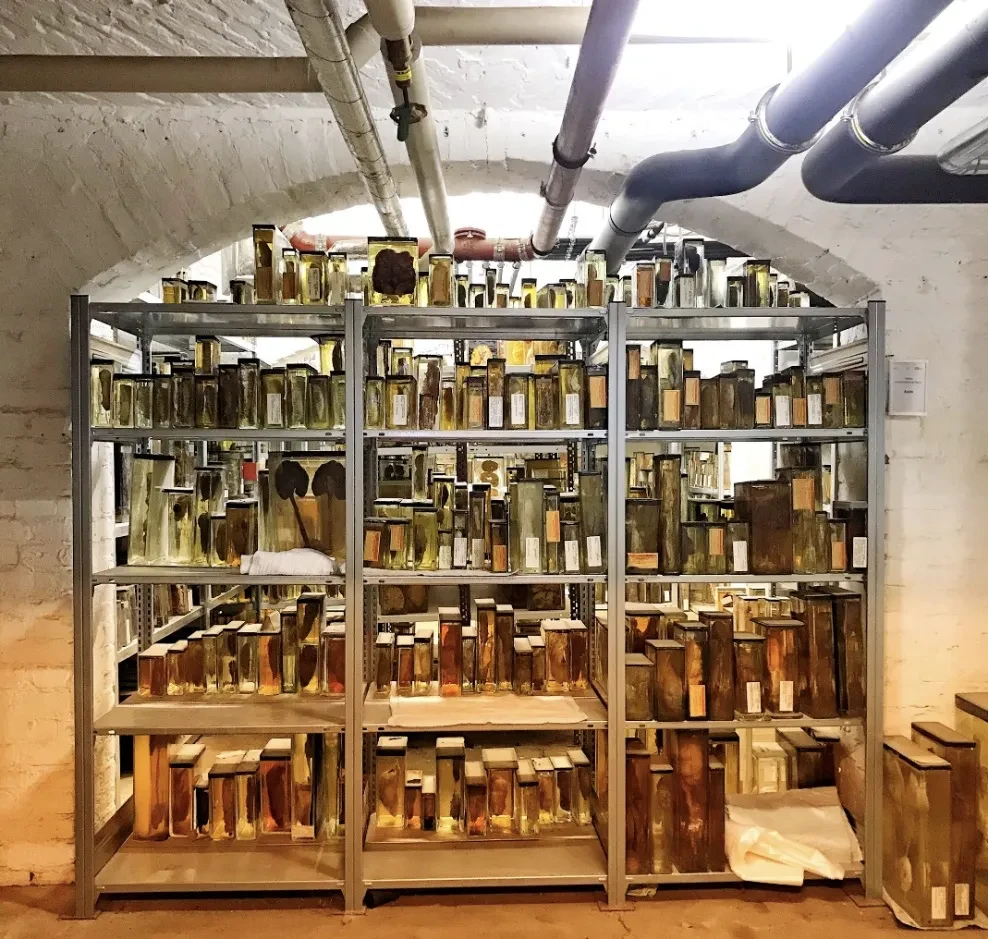
Navena Widulin, Berlin
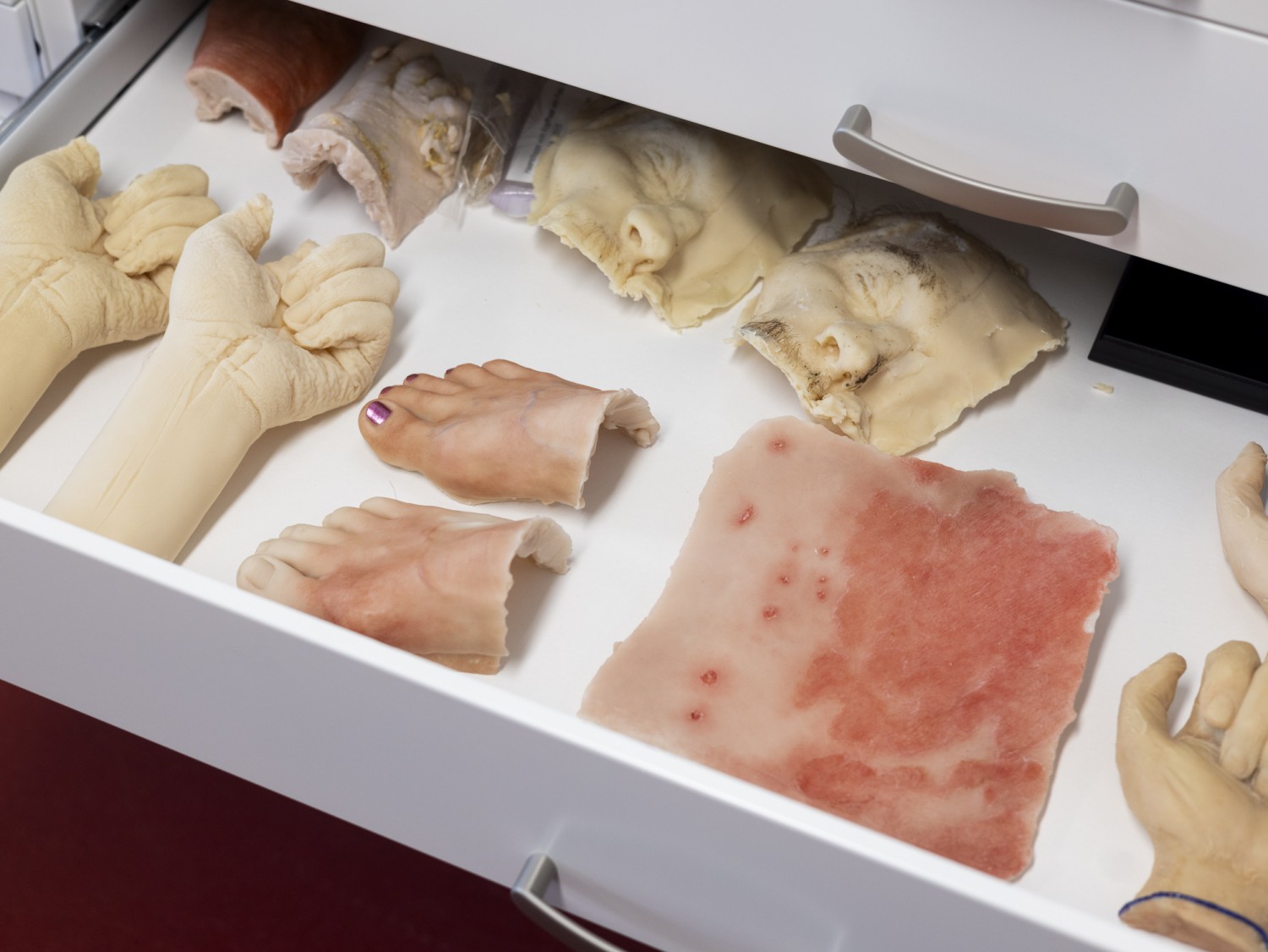
Berlin Museum of Medical History
If we shift our attention away from those who collect voluntarily and towards people who suffer from compulsive collecting, additional meanings of collecting emerge that allow for even deeper insights. People who suffer from what is commonly known as hoarding disorder tend to keep objects that may appear worthless to others and often struggle to organize or discard them. As a result, homes can become severely cluttered, with individual rooms or even entire apartments becoming inaccessible.
Television documentaries and reality shows have brought greater public attention to this phenomenon, yet it is often viewed with amusement by outsiders. It is important to emphasize, however, that hoarding disorder is a serious mental health condition. Those affected cannot simply be held personally responsible for their situation, and the disorder often has a profound impact not only on their own lives but also on their families and close social circles.
For people living with such a compulsion, the home becomes a kind of archive that can be systematically examined. The extent of the clutter, the types of objects being hoarded, their quantity, and the ways in which they are arranged can provide information about:
the age and social circumstances of the people affected
family and relationship structures
personal systems of memory (“Why was this particular object kept?”)
patterns of consumption and disposal across different generations
fears, trauma, and psychological burdens
social isolation
economic insecurity
implicit systems of order
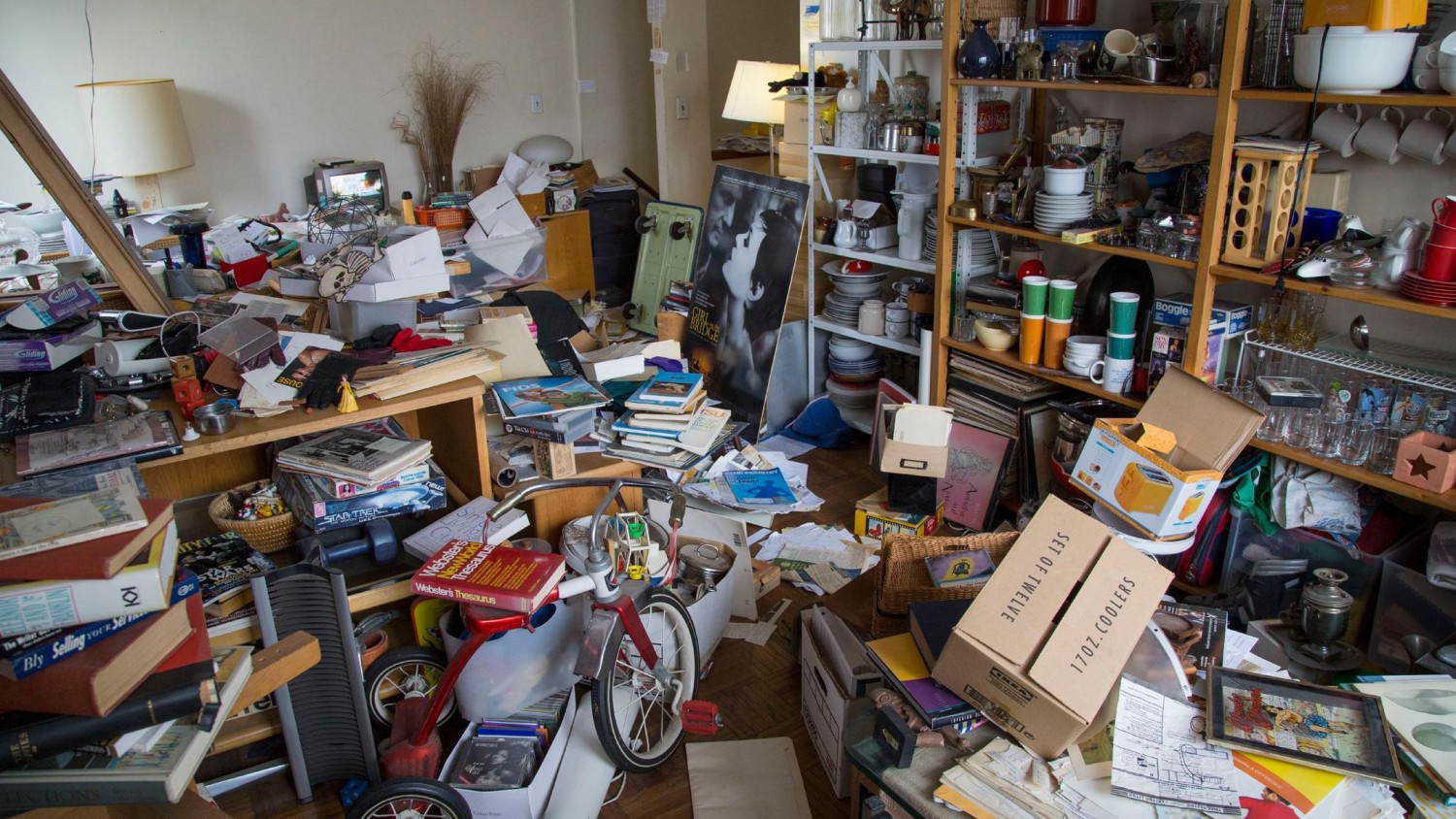
Education Images / Universal Images Group via Getty Images
The length of time during which such a household has existed can also reveal a great deal. In a home where nothing is ever thrown away, everything and everyone leaves traces behind and is, in a sense, preserved indefinitely. As a child and teenager, I first encountered hoarding households while secretly watching reality television. Today, I regularly come across reels and TikToks on my For You page in which people clean, declutter, and restore hoarded homes free of charge. These videos resemble the opening of a time capsule in which traces of the previous months or even years gradually reappear.
Someone else who found it difficult to part with things he no longer needed was Andy Warhol. In the mid-1970s, partly as a result of several moves, the Pop Art artist began storing everyday objects in cardboard boxes. Some of the boxes were organized according to themes, and once they were full, they were sealed and dated, with many remaining unopened until after his death. By the end of his life, Warhol had accumulated 610 boxes that he referred to as “Time Capsules.” They contained objects ranging from valuable items to seemingly mundane possessions, including promotional materials, bills, fan mail, photographs, clothing, and unpublished works.
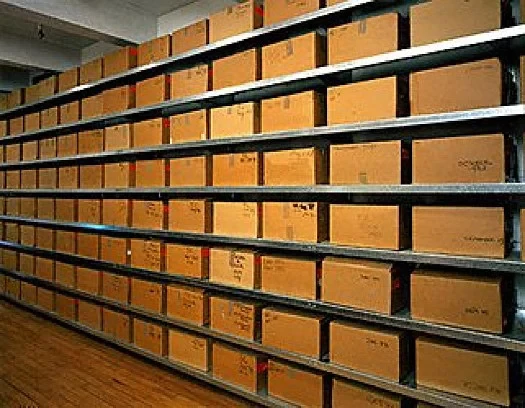
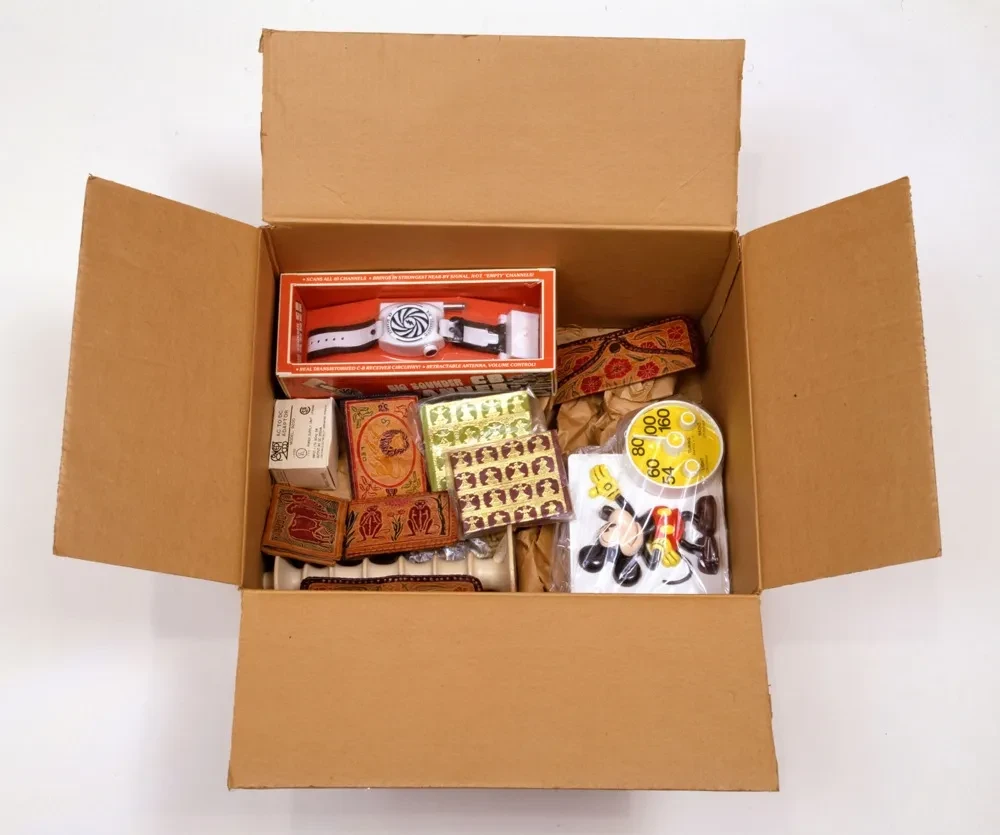
Warhol was driven by an inner conflict. On the one hand, he wanted to get rid of objects shortly after receiving them; on the other, he wanted to preserve them and somehow give them a new purpose. The boxes became a compromise. They allowed the objects to disappear from his everyday life while still remaining in his possession. Even today, Warhol’s time capsules continue to be opened and studied. The boxes that have already been examined reveal how obsessively Warhol documented his own existence.
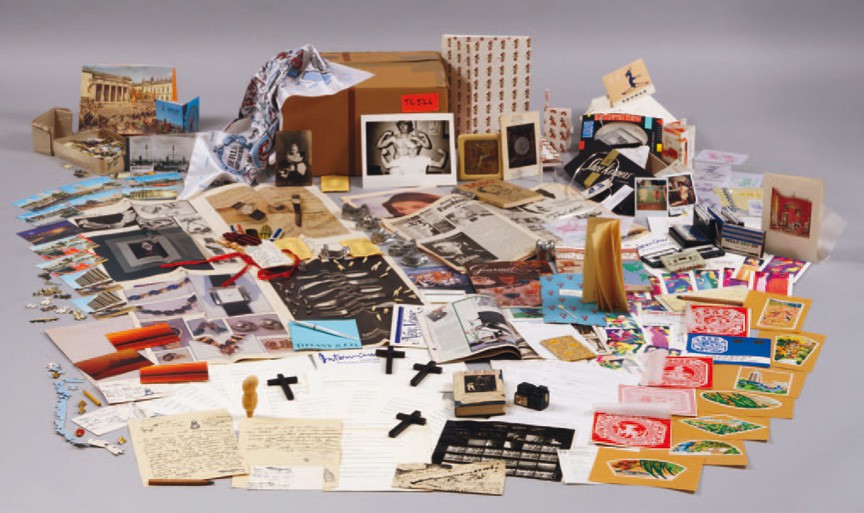
Akram Zaatari, Time Capsule, Kassel, 2012
Giorgia Lupi, an Italian information designer and a pioneer of the design philosophy known as Data Humanism, also works with this form of subjective documentation. Together with Stefanie Posavec, she created the collaborative project Dear Data, which consisted of hand-drawn postcards exchanged every week over the course of a year. These postcards collected personal data from the lives of both women. Each week resulted in a new data visualization accompanied by a legend explaining themes such as A Week of Complaints, A Week of Doors, or A Week of Indecision. One postcard, for example, documented how often the participants complained during a week and what kinds of complaints they made.
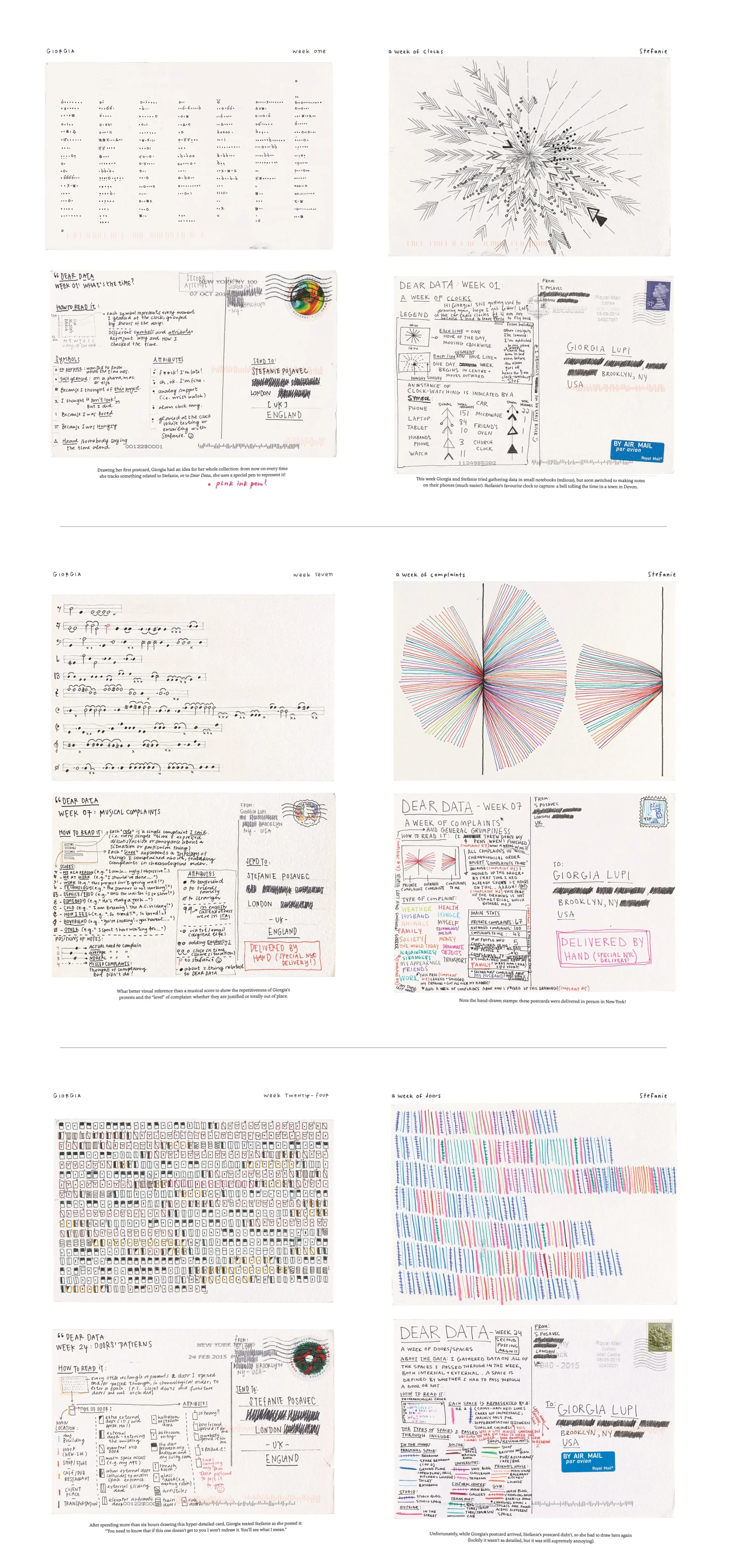
Giorgia Lupi
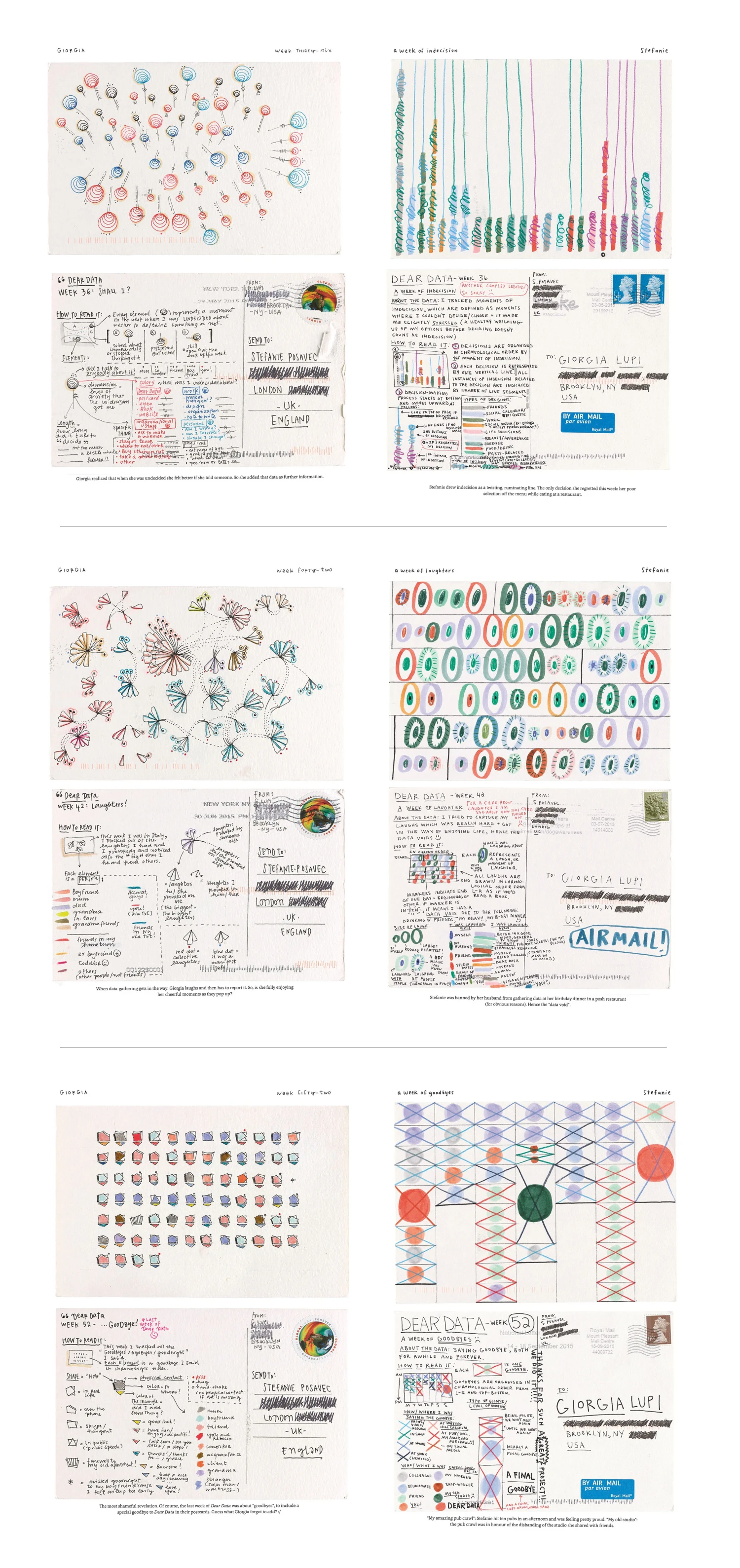
The choice of topics alone made it clear that there was room for subjective perception and personal interpretation. Mistakes and inconsistencies were accepted both in the collection of the data and in its analog visualization. Compared to the previous examples, this approach much more closely resembles what we would normally describe as datasets that can be categorized and analyzed. Nevertheless, Lupi’s work distances itself from scientific, supposedly objective, and standardized forms of data. Instead, it values small, subjective, inspiring, and often accidental pieces of information that remain closely connected to human experience.
These different perspectives on collecting raise the question of what data can be besides scientific numbers. They demonstrate that one does not have to be a data scientist to gather meaningful information and interpret it according to one’s own perspective. Perhaps this idea encourages us to reflect on whether we ourselves collect things and what those collections might reveal about our personalities and interests.
Maybe it is enough simply to observe one’s surroundings, one’s room, or one’s apartment more closely in search of unconscious time capsules or collections of objects that cannot be thrown away for inexplicable reasons, and then to ask why. Or perhaps it inspires someone to spend a week during the semester break tracking how often they are bitten by mosquitoes and where those bites occur…