Maps 1
15.06.2026
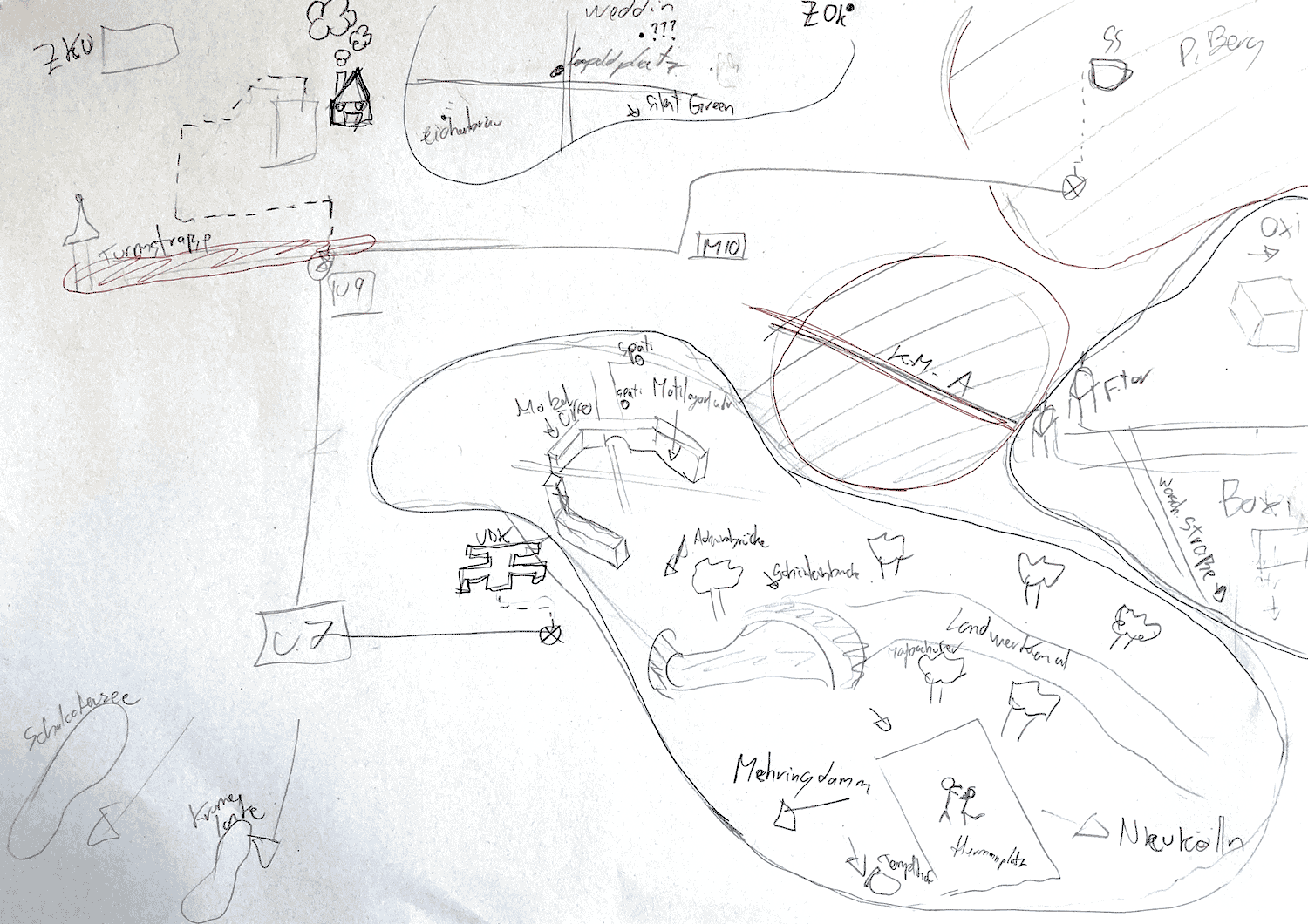
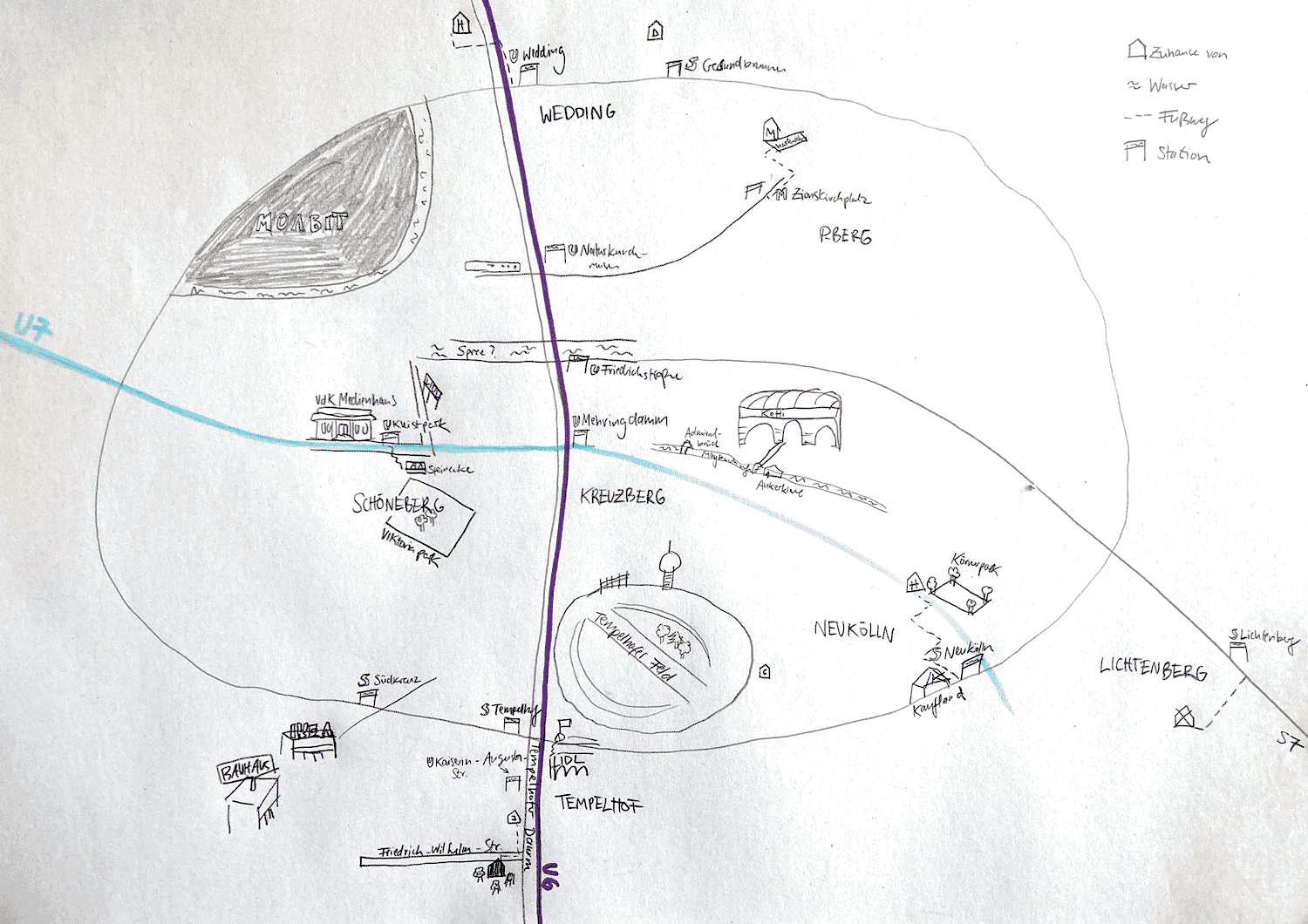
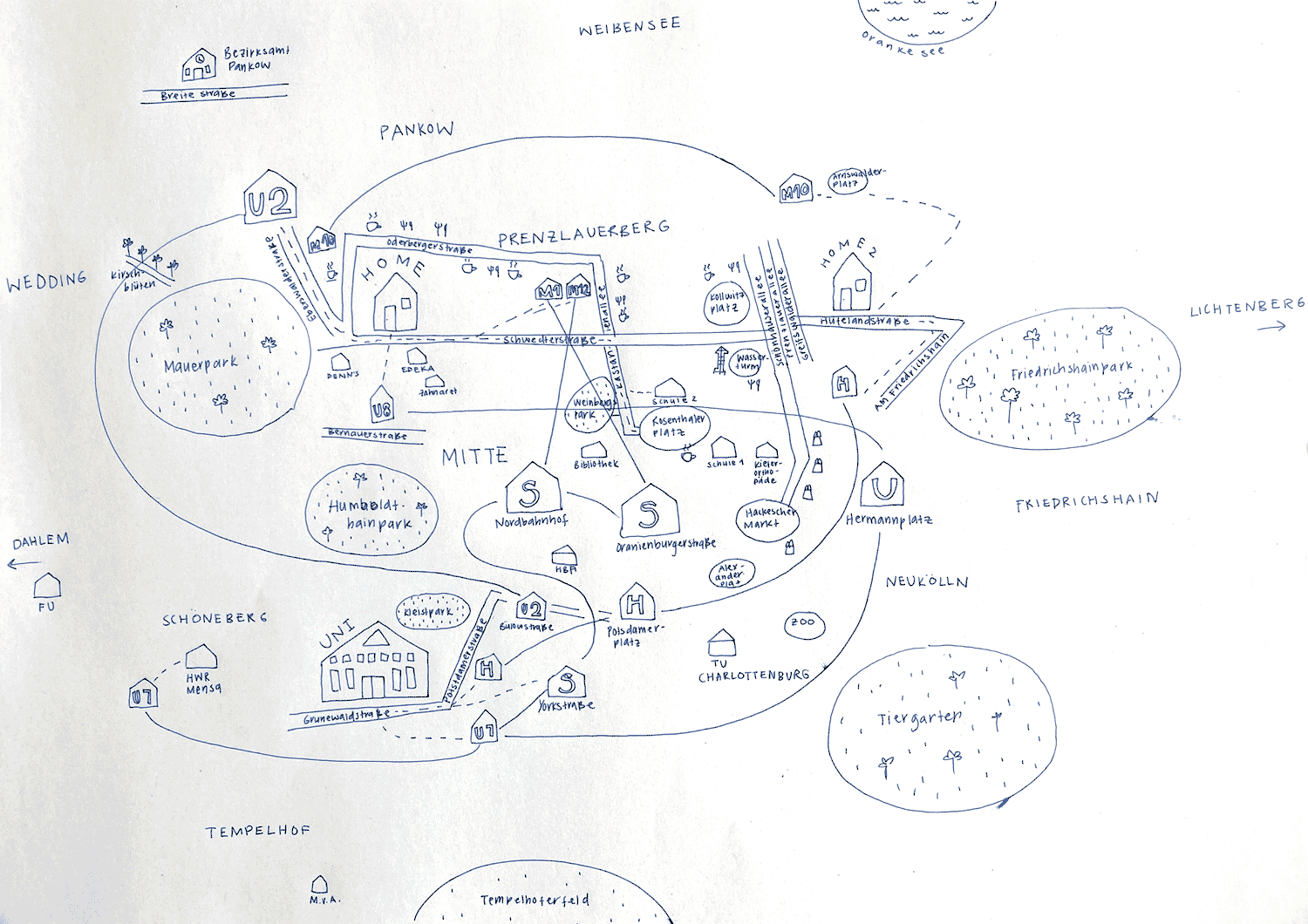
Every day, we navigate spaces without constantly consulting maps. We know where our favourite supermarket is, which U-Bahn line brings us to university and how to find our way home after a long day at work. Yet these internal representations are rarely precise copies of reality. Instead, they are selective and highly personal constructions known as mental maps.
Mental mapping describes the cognitive process through which people organize spatial information in their minds. Rather than storing a complete and “objective” image of the world, humans build subjective models based on experience, memory, emotions and cultural influences. These mental representations help us orient ourselves and understand relationships between places.
What is a Mental Map?
The concept became widely known through the work of urban planner Kevin Lynch in his influential 1960 book The Image of the City. Lynch studied how residents of cities such as Boston, Los Angeles, and Jersey City described their environments. He discovered that people often relied on a small number of recognizable elements to construct their internal image of the city.
According to Lynch, mental maps are built from five components:
Paths: routes people move along, such as streets or subway lines.
Edges: boundaries that separate areas, such as rivers or railway tracks.
Districts: recognizable neighborhoods with a distinct identity.
Nodes: points of concentration or intersections.
Landmarks: memorable objects or buildings.
Berlin offers many examples of these elements. The Spree River acts as an edge, Alexanderplatz functions as a node, and landmarks such as the Fernsehturm or the Brandenburg Gate help residents and visitors orient themselves. Different people, however, will construct different maps depending on where they live, study or spend their time.
(Mental) Maps are never objective
Mental mapping reveals how perception differs from measurable reality. Distances may feel shorter or longer depending on familiarity. Frequently visited locations become more prominent, while unfamiliar areas might appear vague or disconnected. Emotional experiences also influence spatial memory. A place associated with positive memories may occupy a larger role in someone’s mental image than its physical size would suggest. This subjectivity explains why two people living in the same city can describe it in completely different ways. Mental maps therefore represent not only geography but also identity, routines and social relationships.
It is also important to recognize that maps themselves are never completely objective or neutral. Every map is the result of choices: what information to include, what to omit, which elements to emphasize and whose perspective to represent. Scale, symbols, colors, labels, projections and even the orientation of a map influence how people perceive a place or a situation. In this sense, mapping is always an act of interpretation rather than a simple reproduction of reality. The same applies to information design more broadly. Whenever designers visualize data or organize information, they shape narratives and guide attention. Understanding this subjectivity encourages designers to reflect critically on the assumptions, values and power structures embedded in their work. This demonstrates that mapping is not merely a technical activity but also a cultural and emotional one.
Mapping Berlin
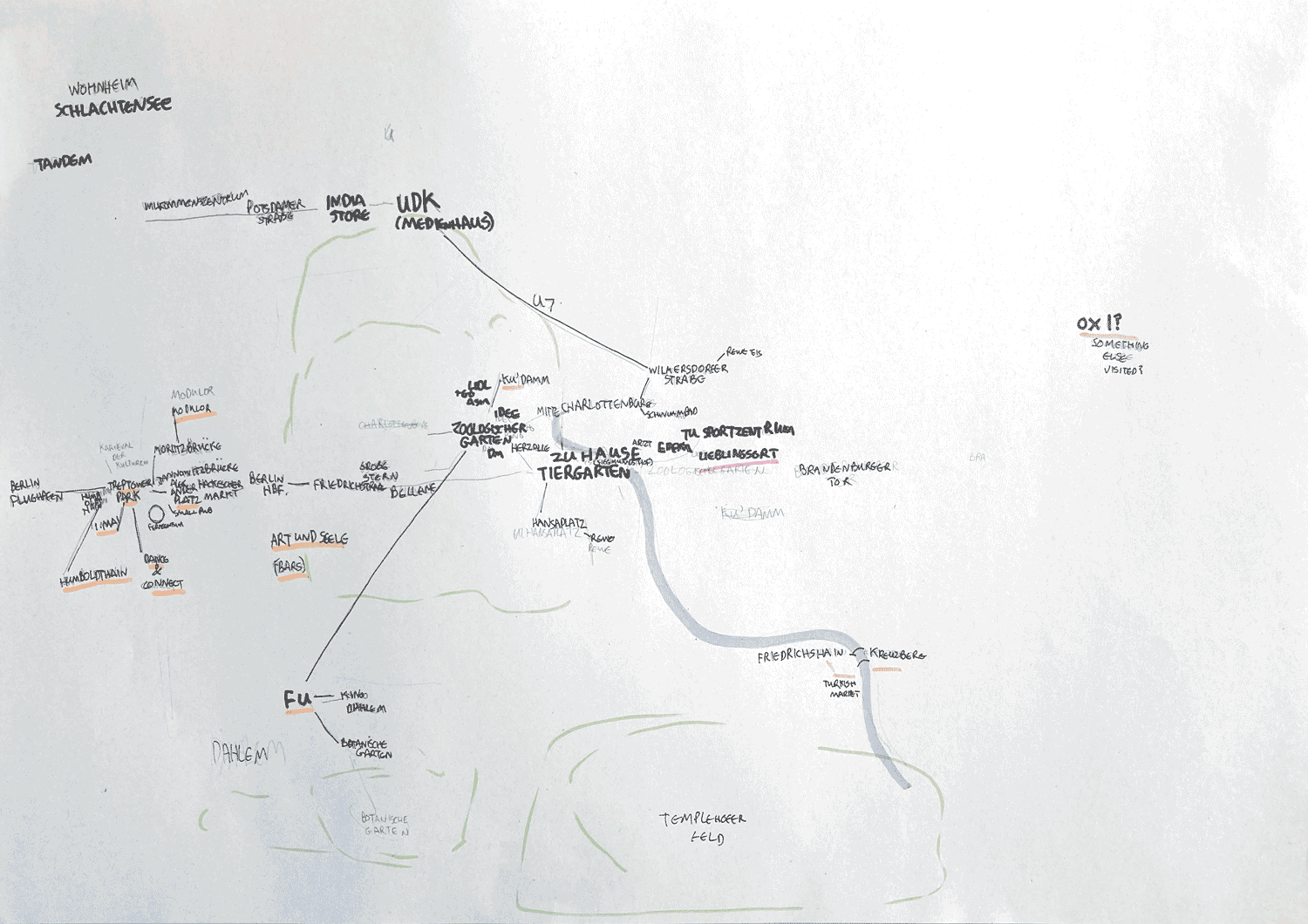
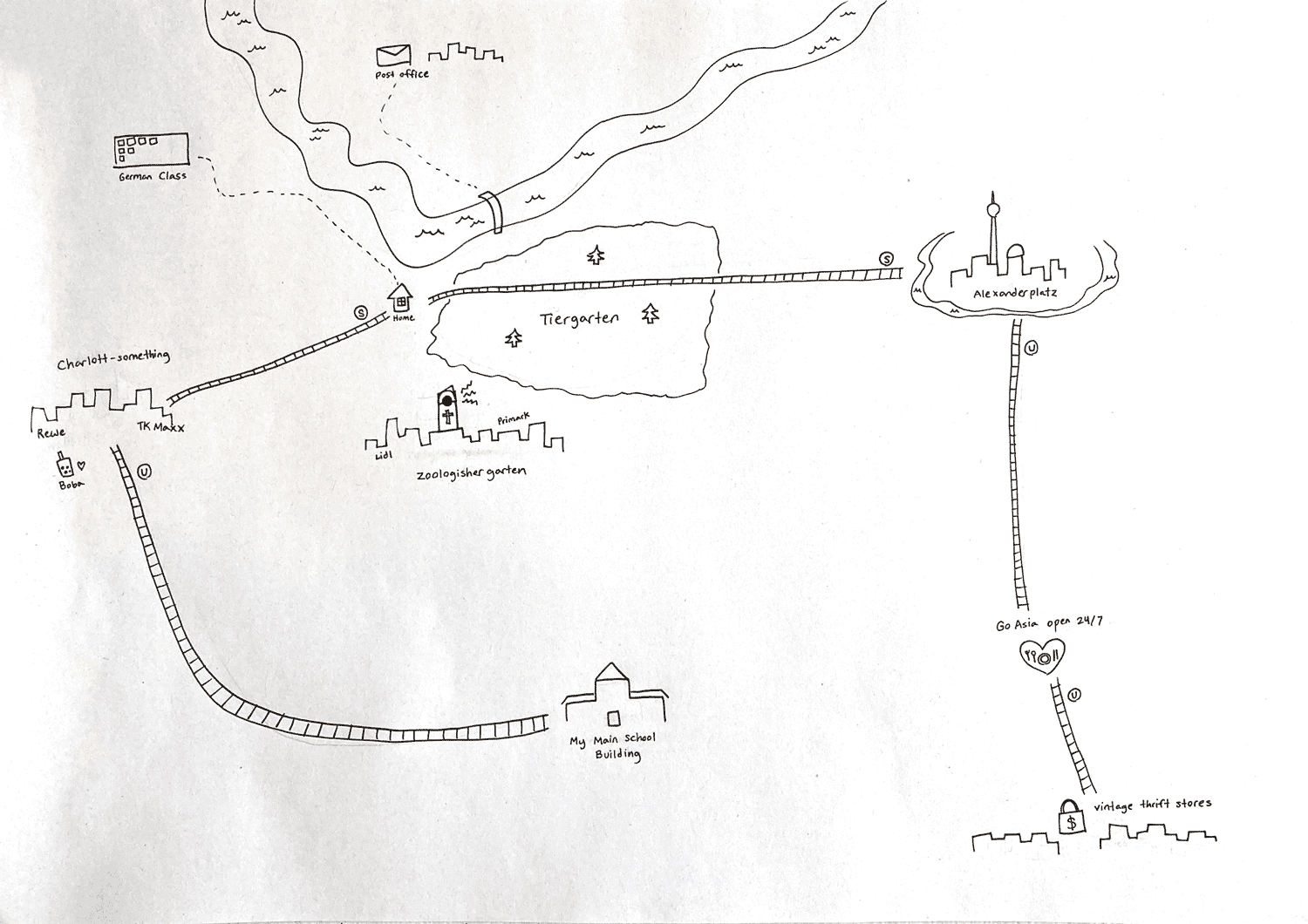
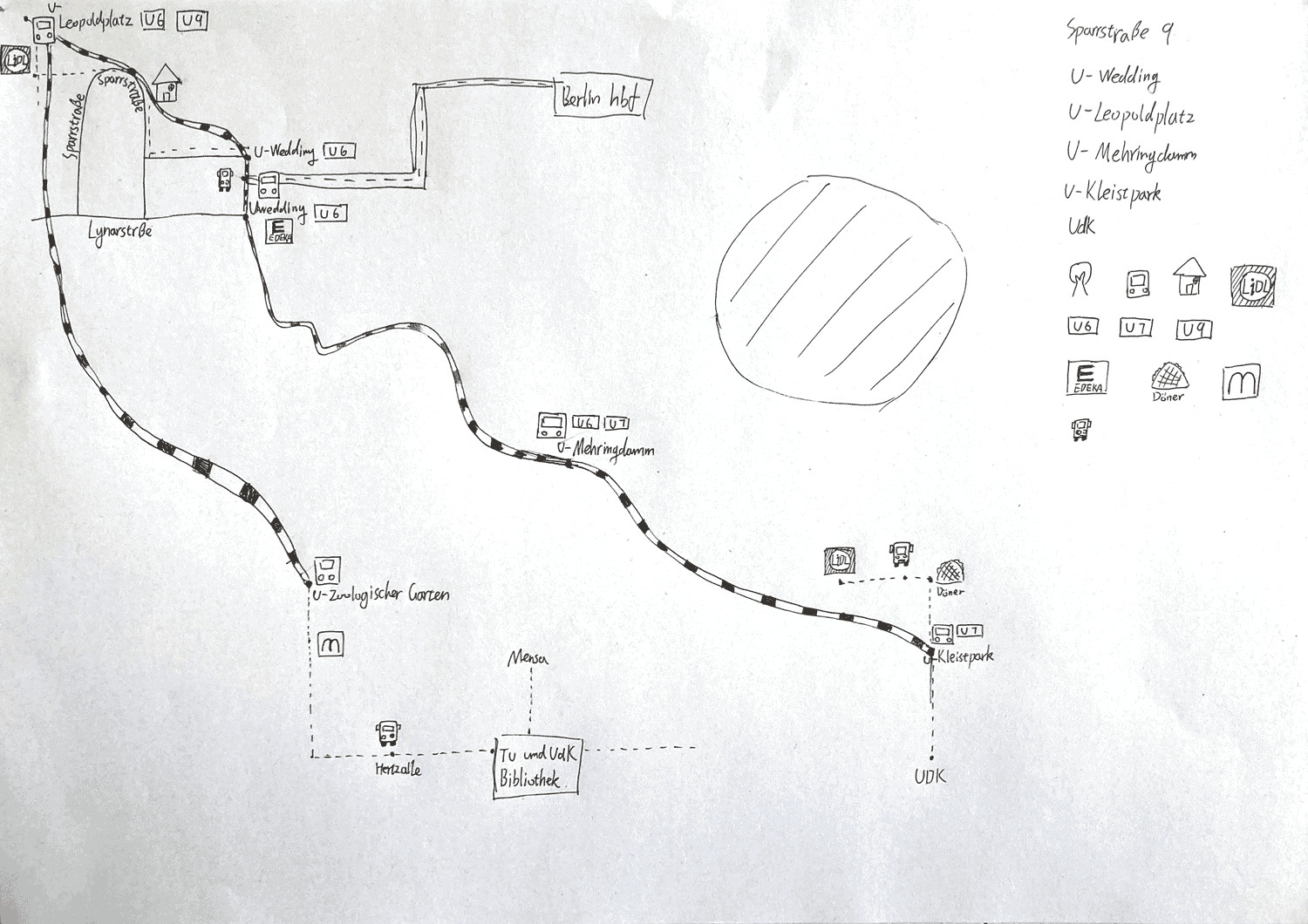
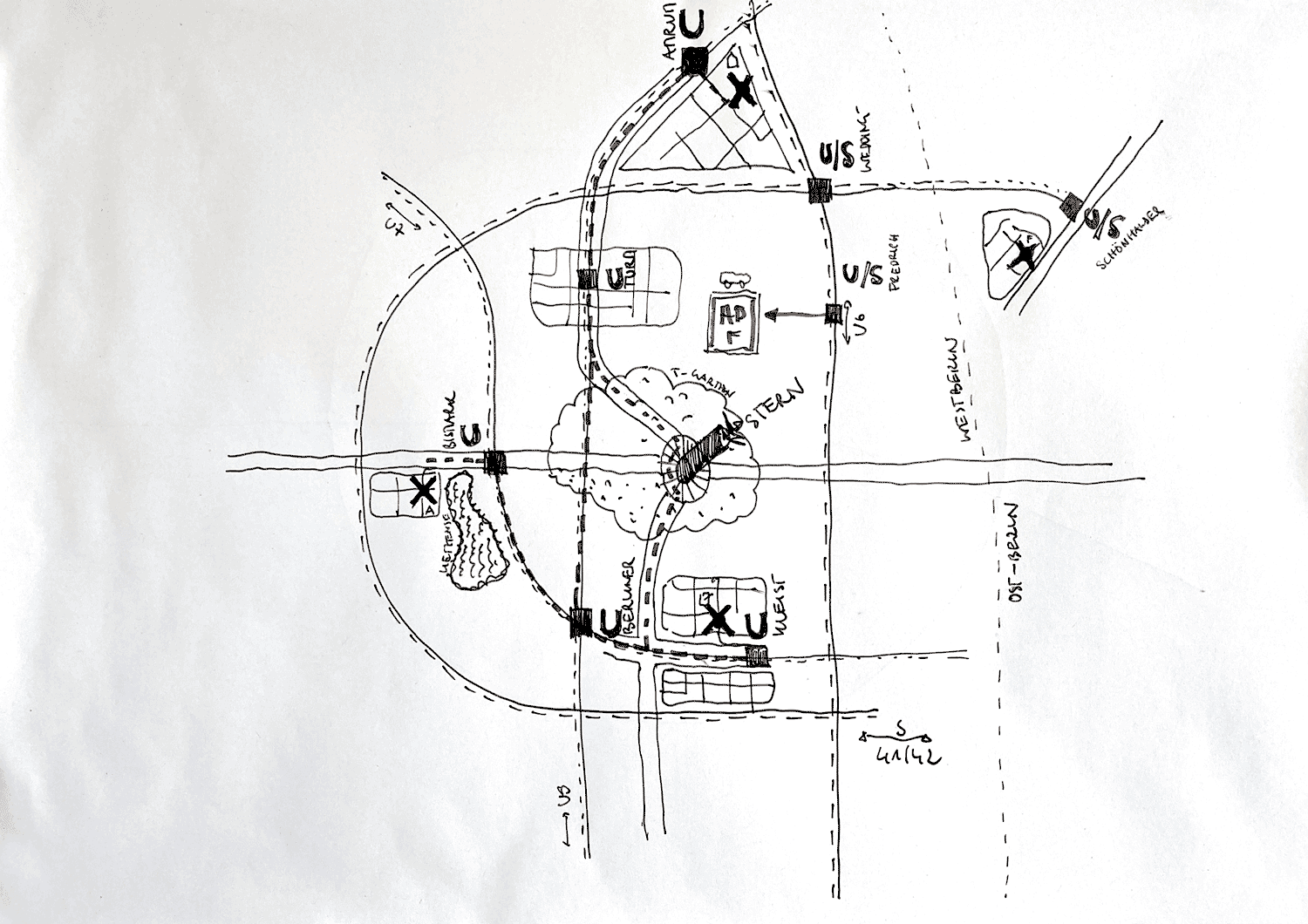
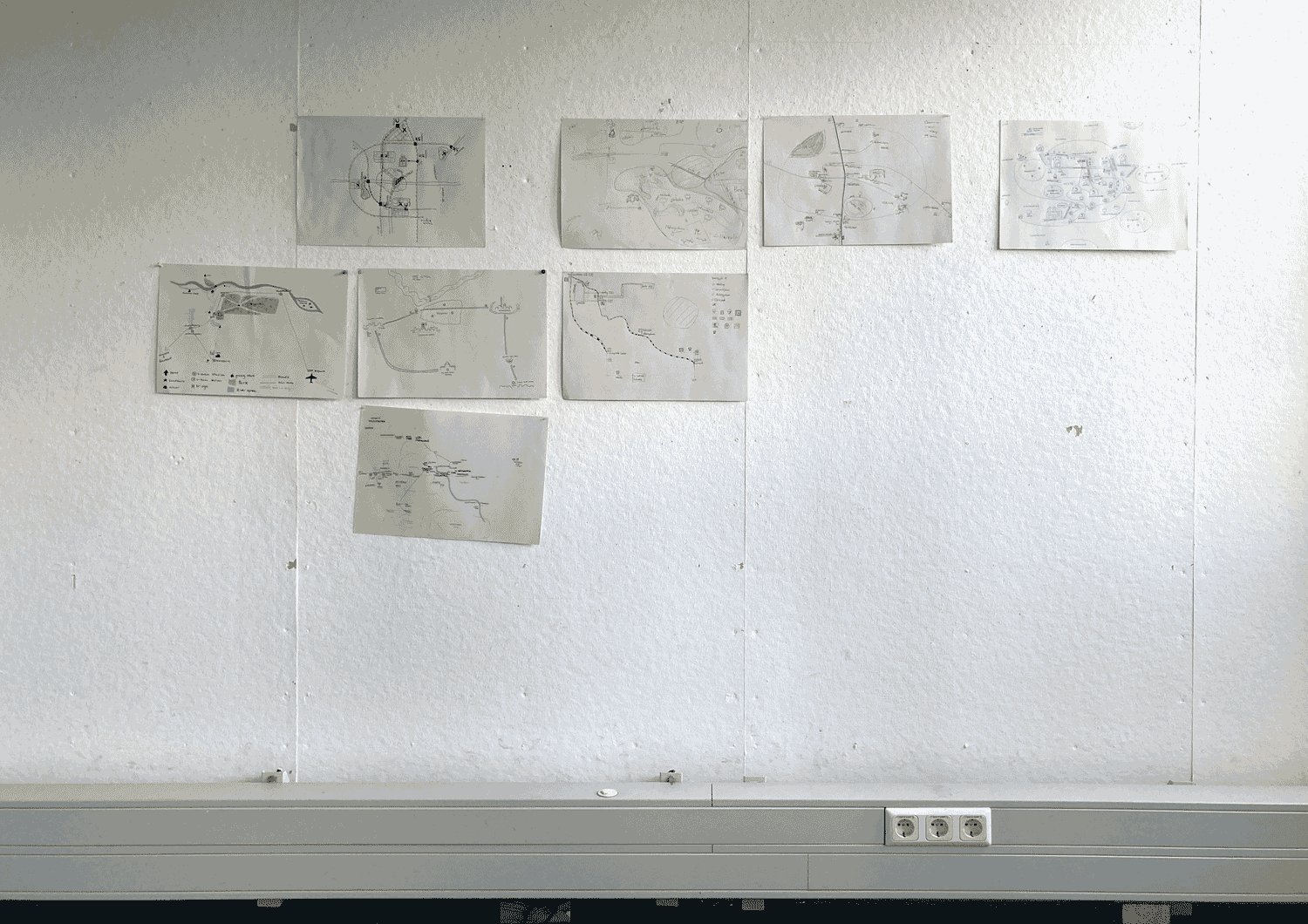
Draw a mental map of Berlin from memory (without consulting Google Maps). Try sketching:
Your route from home to UdK
Places you visit regularly
Landmarks you use for orientation
Areas you rarely enter or avoid entirely